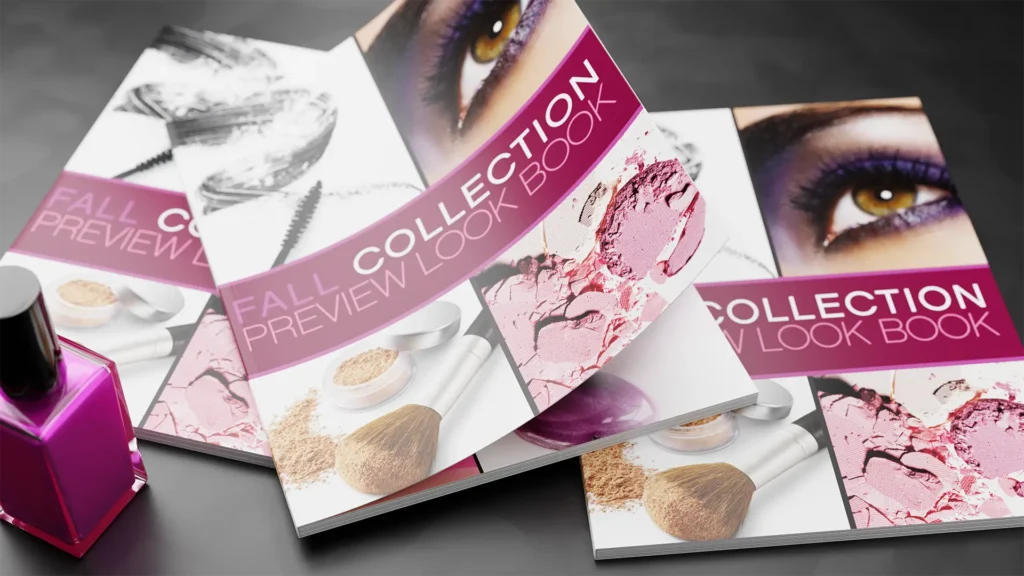
Booklets are an accessible and versatile way to share information in a compact format. Whether you’re looking to showcase a product, inform an audience, or create a memorable event program, a booklet can do it all!
So, what’s a booklet, and what are they used for? In this blog post, we’ll define booklet basics and explore how you can customize them with Printivity to fit your specific needs. Let’s look at how a small book can make a big impact.
What are Booklets?
The meaning of booklets is straightforward: a booklet is a small book used to share detailed information in a compact format. Booklets fill the gap between brochures and actual books. They’re great as instruction manuals, product showcases, advertisements, business pitches, travel guides, and more.
Booklets sit between simpler print pieces and full-length books. They offer more room than flyers, pamphlets, or folded brochures, but are usually shorter, lighter, and easier to distribute than books. That makes them a great fit for projects not requiring a longer publication but still needing organized sections, images, instructions, product details, or event information.
In short, common booklet uses include:
- Product catalogs
- Instruction manuals
- Event programs
- Business pitches
- Travel guides
- Marketing & promotional handouts
- Company reports
- Training materials
How Long Is a Booklet?
Booklets usually contain between 8 and 36 pages and are commonly saddle-stitched, although they can be bound in other ways. Looks can vary as well, but what does a booklet look like? Looks can vary as well, but the standard measurement for a booklet is 5.5 inches by 8.5 inches.
What Is the Difference Between a Booklet and a Book?
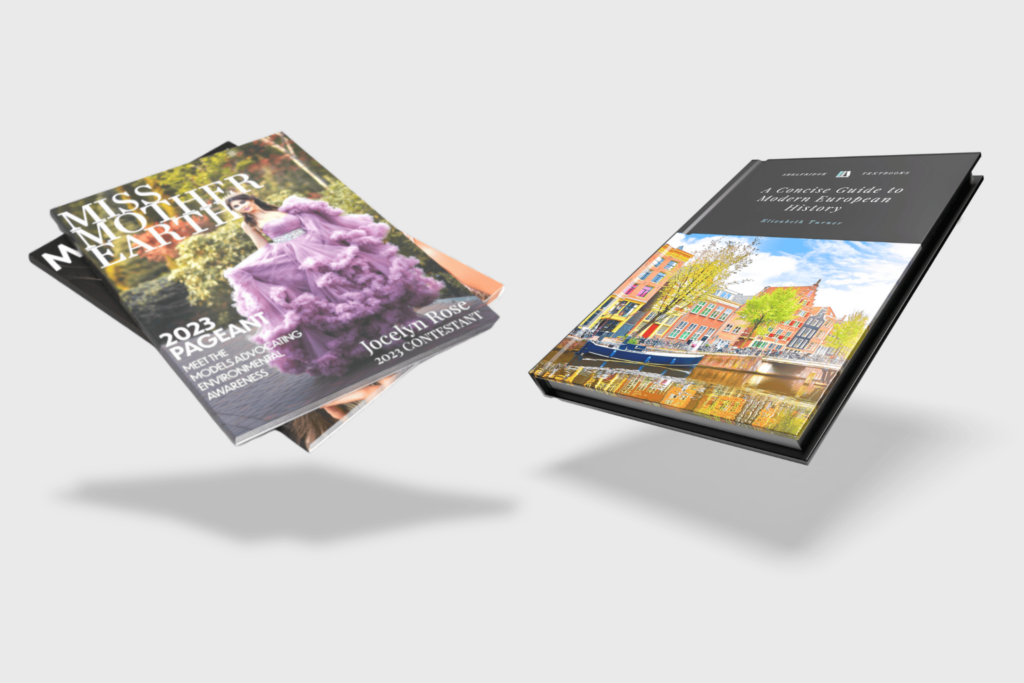
A book and a booklet are quite similar, and not just by name, both sharing the same purpose: to pass on detailed information, share ideas, and tell stories. They’re also formatted similarly featuring printed pages bound together with a cover.
However, the booklet/book similarities end, the many differences between the two coming down to function, size, page count, binding, and cover type, making each format suitable for different tasks.
How Are Booklets and Books Physically Different?
Size is the main difference in the booklet vs. book debate, with other differences including page count, binding, and cover type.
- Size: The standard measurement of a booklet is 5.5 inches by 8.5 inches, both in portrait and landscape formats. A book, on the other hand, typically measures 8.5 inches by 11 inches.
- Page count: A booklet has between 8 to 36 pages. But when the page count exceeds 36, it becomes a book.
- Cover type: The cover of a booklet is either soft (the cover page is thicker than the inner pages) or a self-cover (the inner pages and cover pages are made of papers of the same thickness). In comparison, a book typically has thicker cardstock cover or hardcover.
- Binding: Saddle stitch is the most common binding used for booklets. On the other hand, books are more often bound in styles like perfect binding, spiral binding and wire-o binding.
Aside from these, compared to books, booklets are easy to carry around. They can even be mailed easily, distributed for promotional purposes, or packaged together with other items.
When Should You Use a Booklet Instead of a Book?
Once you understand the key differences between booklets and books, the right choice depends on your content, audience, and budget
Choosing between a booklet and a book comes down to three things:
- The purpose of the information you’re trying to pass on
- The audience of said information
- Your budget
A booklet is the best choice if you’re looking to share brief, focused information — like a sales pitch, a product catalog, or an instructional manual. Booklets are designed to be easily skimmable, so they’re perfect for passing concise and straightforward information. Plus, the compact size of booklets makes them easy to distribute to a targeted audience, like potential customers, investors, or event attendees.
On the other hand, if you’re creating a detailed resource with extensive explanations, a book might be more suitable.
A booklet is also a great choice if you’re working with a tight budget. It’s significantly more cost effective than printing a full book. Booklets can be used instead of books for short print runs, small-scale events, or limited-time productions. For example, a non-profit organization can use booklets to spread awareness about a topic.
How Can You Customize a Booklet’s Design and Format?
Booklets leave plenty of room for creativity and personalization in their design. They can be easily tailored to specific needs, audiences, and project requirements. Common booklet sizes, finished dimensions, and binding styles help you create a piece that truly fits your purpose. Reputable custom printing services like Printivity offer a range of customization options to ensure you have the perfect booklet for any occasion.
What Is the Standard Size of a Booklet?
There are two common booklet sizes for printing:
- 5.5″ × 8.5″: This standard booklet size is perfect for creating product catalogs and promotional material. It’s easy to carry around and reference and fits in a standard envelope for mailing.
- 8.5″ × 11″: This is a booklet size that’s the same size as a book, but with a lower page count. Booklets in these larger dimensions create more space for detailed images and text, making them ideal for company reports and instructional manuals.
What Are the Most Common Booklet Binding Options?
Booklets are most commonly bound with the saddle stitch method. Other binding options include the perfect bound, spiral bound, and wire-o methods.
- Saddle Stitched: The saddle-stitch method involves binding the pages of a booklet together using several staple through the fold. It’s fast and cost-effective, making for a neat finish that’s ideal for magazines, catalogs, and brochures.
- Perfect Bound: In perfect binding, the pages of the booklet are clamped and glued at the spine before they’re wrapped in a soft cover. This gives a professional finish and an additional customizable edge, perfect for lookbooks, portfolios, and magazines.
- Spiral Bound: To spiral bind booklets, one edge of the pages is perforated and held together using a plastic coil that’s twisted through the holes and securely crimped at the ends. The pages of a spiral-bound booklet can move 360 degrees and independently of each other, making them ideal for work manuals.
- Wire-O: Similar to the spiral bound method, wire-o binding uses a double metal coil twisted through perforated pages to hold the booklet together. The double-wire loop is durable and neat, a great fit for sales catalogs, business reports, and manuals.
Elevate Your Project with Printivity’s Premium Booklets
Looking to create the perfect booklet? Printivity combines quality materials, precise printing, and expert craftsmanship to create crisp, well-bound booklets that feel polished from cover to cover.
Ready to make magic? Explore Printivity booklet printing services today to compare sizes, binding options, paper choices, production time, and delivery options before you order

Recent Posts
-
 Customer Highlight: How Wedding Venue Map Simplifies Wedding Planning
 -
 Making a Difference with Tiffany and The Gem Foundation
 -
 What Is Saddle Stitch Binding? A Quick Guide for Print Projects
 -
 Booklet Layout: How to Arrange and Order Pages for Printing
 -
 Guide to Choosing the Right Binding for Church Programs